Callbacks are expensive twice: you burn a truck roll you cannot always bill, and you steal capacity from customers still waiting. In HVAC, many callbacks are not "bad techs"—they are **weak dispatch and thin job notes**. The wrong person ar
Callbacks are expensive twice: you burn a truck roll you cannot always bill, and you steal capacity from customers still waiting. In HVAC, many callbacks are not "bad techs"—they are weak dispatch and thin job notes. The wrong person arrives, the history is missing, or the first visit ends without a clear next step.
This guide focuses on dispatch habits and documentation practices that reduce comebacks without slowing the board to a crawl.
What causes HVAC callbacks you can control
Some returns are unavoidable (intermittent faults, parts lead times, customer-caused issues). Many are preventable:
- Mis-triaged calls (install tech sent to complex diagnostics—or vice versa)
- Missing model / serial / warranty context
- Incomplete first-visit notes ("worked on A/C" is not a note)
- Parts not ordered or not staged for the return trip
- No customer communication about what was temporary vs. permanent
- Maintenance visits treated like mystery repairs with zero checklist
Dispatch and notes are the levers office and field share.
Build a dispatch triage that takes 90 seconds
When the call comes in, capture enough to assign intelligently—not a novel, not three blank fields.
Minimum triage fields
- Symptom in customer language ("not cooling," "breaker trips," "noisy outdoor unit")
- System type if known (split, package, heat pump, furnace, mini-split)
- Urgency (no heat in freezing weather vs. maintenance)
- Access and occupancy (vacant rental, gated, pets, HOA)
- Prior work (recent install, open recall, membership status)
- Preferred window and site address
Skill-based assignment rules (simple)
Create a lightweight matrix:
- Maintenance / filter / tune-up → maintenance-capable techs
- Electrical / control boards → techs comfortable with diagnostics
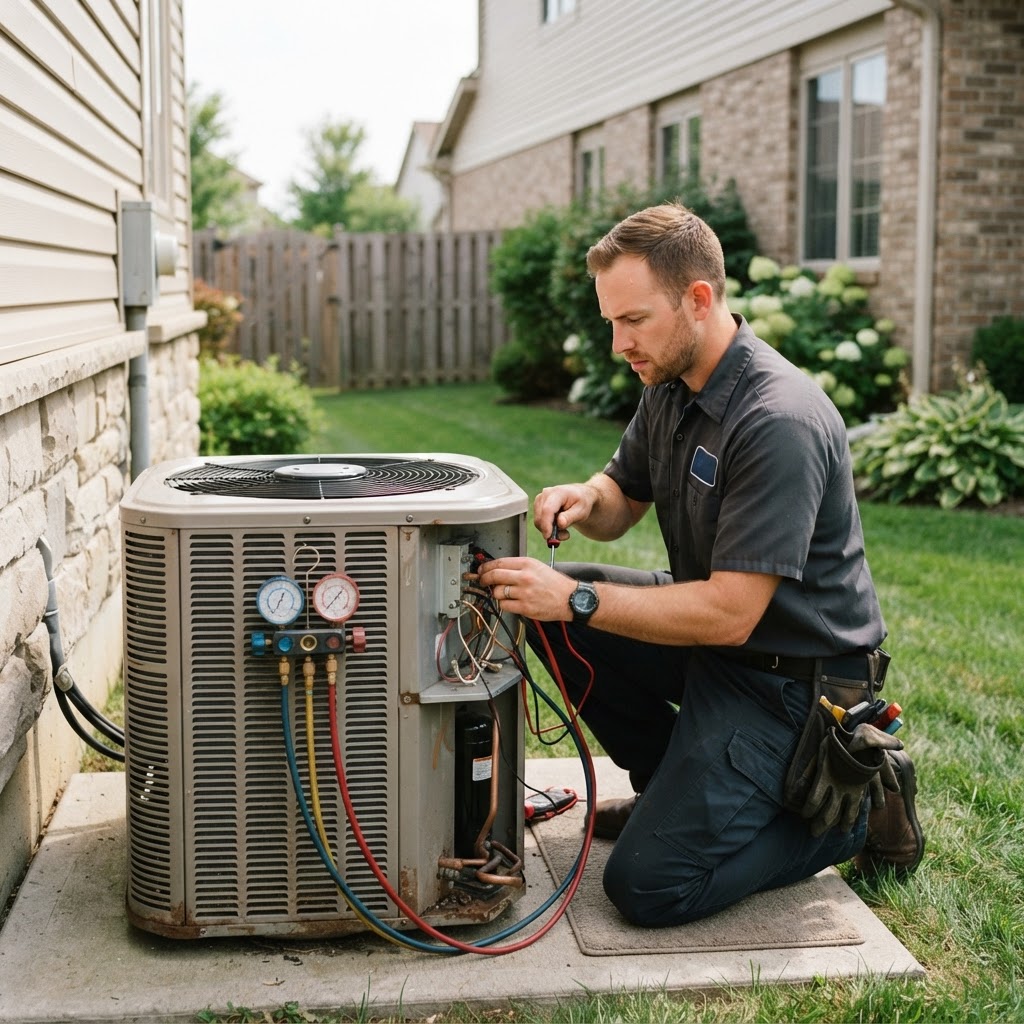
- Refrigerant circuit work → certified techs with gauges and recovery gear
- Install / change-out → install crew with helper capacity
- Warranty manufacturer quirks → techs who know that brand
If only the owner holds this matrix in their head, dispatch quality drops the week they take vacation.
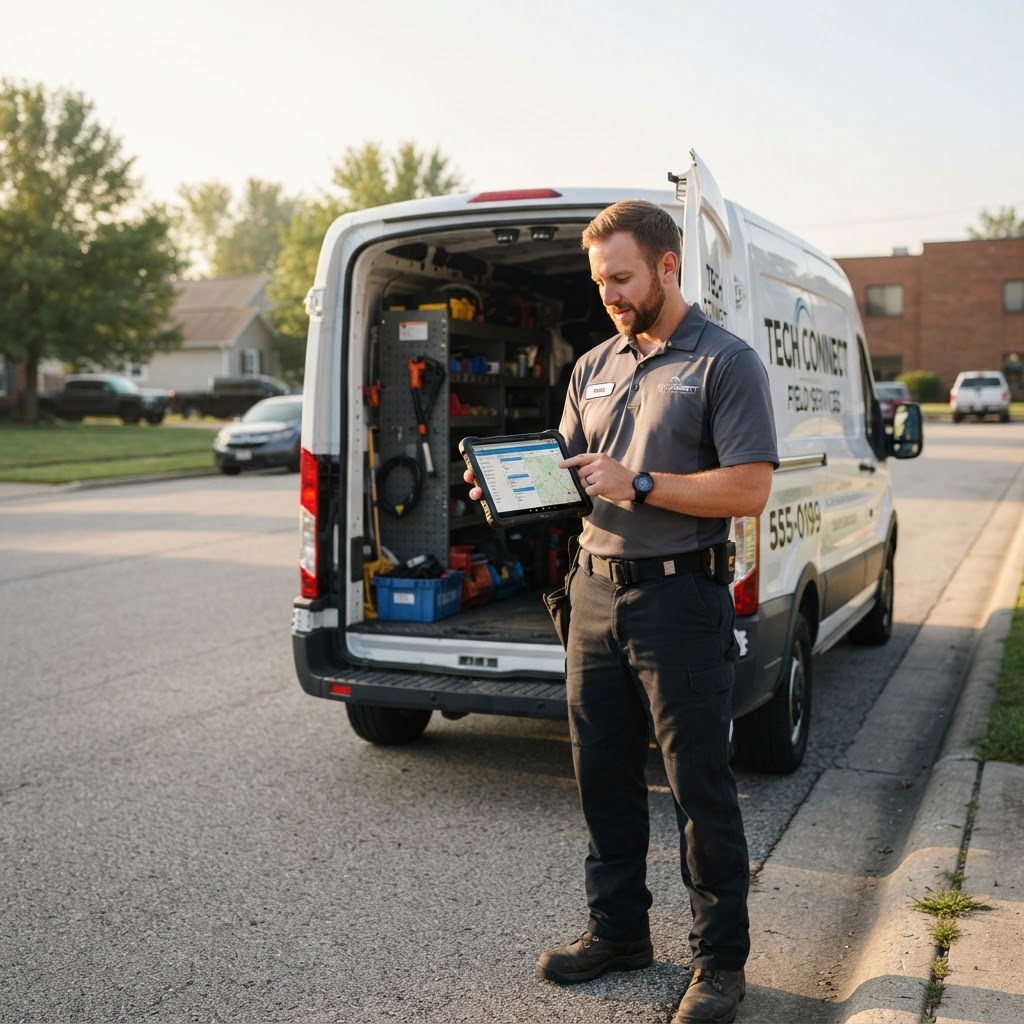
Give every job a "first truck" readiness check
Before the tech rolls:
- Address and contact confirmed
- Symptom and system type on the job
- Membership / warranty flag visible
- Last visit summary attached or one click away
- Known equipment details if on file (brand, model, filter size)
- Truck stock hints (capacitor assortment, common contactors, filters) when pattern suggests it
You will not stock every part for every call. You can stop sending techs in blind when the office already knew the unit was a five-year-old heat pump with two prior hard-start issues.
Job notes that cut callbacks (templates that work)
Techs do not need essays. They need structured completeness.
Use a consistent note skeleton
- Findings — what was observed / measured
- Actions — what was repaired, replaced, adjusted
- Parts used — with identifiers when relevant
- Tests after work — pressures, temps, amp draws, error codes cleared (as applicable)
- Open items — what remains, risks, customer decisions pending
- Customer conversation — what they were told and agreed to
Example of a weak note:
Replaced capacitor. All good.
Example of a stronger note:
Indoor blower weak; outdoor unit hard starting. Measured weak dual run capacitor; replaced with 40/5. After: outdoor amp draw normal, supply air delta-T ~18°F after 15 min. Filter dirty—customer declined replacement today. Recommend return for filter + coil check if airflow complaint continues.
The second note prevents a confused second tech—and supports billing if the customer later claims "nothing was fixed."
Photo habits worth requiring
- Nameplate / model-serial when first on site
- Error code screens
- Failed parts when helpful for warranty or explanation
- Thermostat settings if customer confusion is likely
Photos reduce "he said / she said" and speed parts lookup later.
Maintenance visits need checklists, not vibes
Tune-ups become callback factories when each tech improvises.
Standardize a maintenance checklist (customize for your company):
- Filter condition / size documented
- Electrical connections inspected
- Capacitor measurements (when in scope)
- Coil condition notes
- Drain line / pan check
- Thermostat operation
- Safety controls as applicable
- Customer recommendations with priority (now / soon / monitor)
When recommendations are logged on the customer record, sales follow-up and future diagnostics get easier—and "we told you in spring" becomes factual.
Close the loop on parts and return trips
Many callbacks are really poorly managed planned returns.
Process:
- First visit diagnoses; part ordered / quoted
- Job stays open with status like "parts pending" (not "complete")
- Part arrival triggers scheduled return with the same context
- Return tech sees prior findings without calling the first tech
- Final tests and customer explanation close the job
If your board marks everything complete to "clear the day," you will rediscover the problem only when the customer calls angry.
Dispatch communication that prevents repeat visits
Set expectations on temporary fixes
If you jumped a relay, cleaned a drain as a temporary clear, or reset a lockout, say so in the notes and to the customer. Temporary comfort without documentation is a callback with a bad review attached.
Confirm decision points
When a customer declines a recommended repair, log it. The next dispatcher should see the decline before sending a free "why is it broken again" visit that was actually an unpaid second opinion on a declined fix.
Metrics that show if notes and dispatch are working
Track monthly (counts are enough):
- Callbacks within 7 days of a completed job
- Callbacks within 30 days of maintenance
- Same-issue returns on "parts pending" jobs
- Average time to second visit when parts were required
- Jobs missing model/serial after first visit (process compliance)
Do not weaponize the metrics. Use them to coach note quality and triage—not to punish techs for intermittent ghosts.
Training: 20 minutes that pays for itself
Once a month:
- Review two excellent job notes and two weak ones (anonymize if needed)
- Review one mis-dispatch and what triage field would have prevented it
- Update the skill matrix for new equipment types you are seeing
Culture change is repetition, not a memo.
Where CrewField fits for HVAC teams
CrewField keeps customers, jobs, calendar dispatch, quotes, and invoices in one system so triage details and job notes stay attached to the work—not buried in a text thread. Issues and history travel with the customer record; techs can work from a clearer job context; office can schedule returns without rebuilding the story.
See dispatch- and job-related capabilities on CrewField features, or compare the flat unlimited-team pricing if per-tech fees have made staffing peak season painful.
One-week callback reduction sprint
Day 1: Publish the triage field list and skill matrix.
Day 2: Adopt the six-part job note skeleton company-wide.
Day 3: Stop marking parts-pending jobs complete; add a visible status.
Day 4: Require nameplate photos on first visits for systems not yet in the file.
Day 5: Review every callback from the past two weeks—tag preventable causes.
Weekend: Fix the top two process gaps (usually notes or mis-assignment).
Bottom line
HVAC dispatch and job notes cut callbacks when they make the next person smarter—the next tech, the next dispatcher, and sometimes the customer. Triage with intent, assign by skill, document findings like a professional, and keep incomplete work visibly incomplete.
Do that consistently and you will free trucks for billable first visits instead of apology second trips.